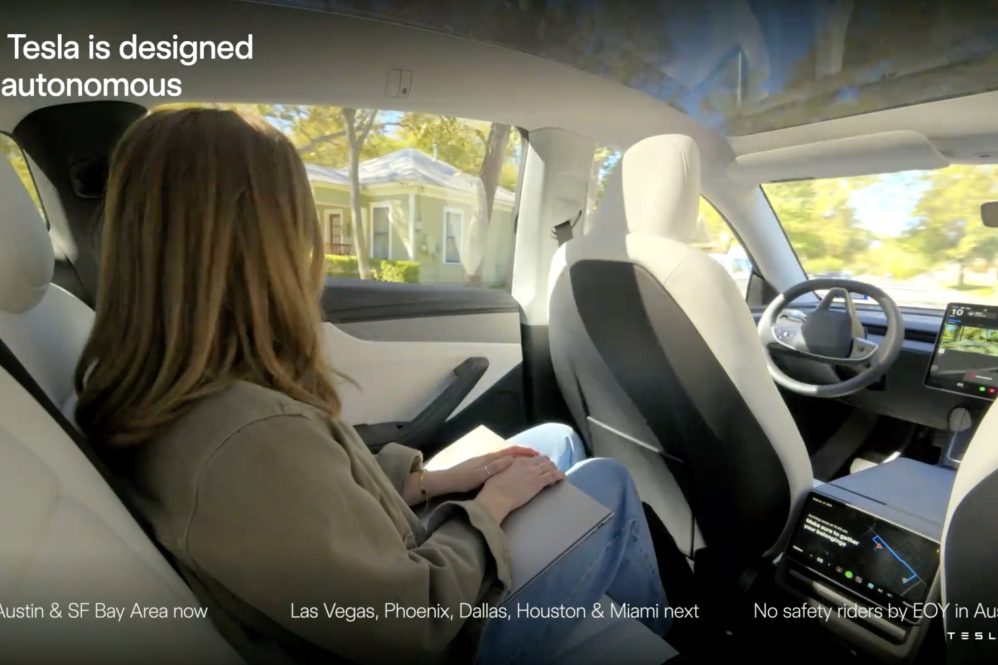
A newly decompiled version of Tesla’s Robotaxi app, version 26.3.0, points to major progress on payments, user interface improvements, and deeper integration with Tesla’s upcoming Cybercab service.
According to a decompile of the app by Tesla App Updates on X, one of the most notable additions is native support for Apple Pay and Google Pay. Rather than manually entering card details, riders will be able to pay instantly using their device’s built-in digital wallet, a move that could significantly streamline the user experience. The app also appears to allow users to set their preferred wallet as the default payment method, eliminating friction for repeat trips.
The inclusion of Google Pay assets is particularly notable, as it suggests Tesla’s Android version of the Robotaxi app is nearing release. Until now, the Robotaxi app has only been available on iOS, but this update indicates a broader rollout to Android devices could be near.
Beyond payments, the update includes several quality-of-life improvements aimed at making the app feel more dynamic and intuitive as the Tesla prepares to launch its dedicated Robotaxis, Cybercab. The map interface appears to be getting a significant upgrade, with smoother animations and responsive elements. Location pins will reportedly scale and highlight as users interact with them, while route lines dynamically adjust and fade as the vehicle progresses along its journey.
There are also hints of a more immersive interface, including a parallax effect tied to a phone’s gyroscope. This would allow certain on-screen buttons to subtly shift in response to device movement, adding a layer of depth to the user experience.
Convenience features are also expanding. The code suggests riders may soon be able to edit their destination directly from a lock screen notification, avoiding the need to reopen the app mid-trip. Meanwhile, updated pricing components will clearly display ride costs, alongside improved error handling if a payment method fails.
Safety and control features appear to be a major focus as well. The app includes commands such as “PullOverCommand” and “DisengageDriverless,” giving passengers the ability to stop the vehicle or exit autonomous mode if needed. These controls are reportedly tied to Tesla’s secure communication system, allowing commands to be executed instantly without relying on cloud connectivity.
Additional backend features hint at how Tesla plans to handle edge cases in a driverless environment. Commands like “ResetInfotainment” suggest passengers or remote operators could reboot the vehicle’s system if it becomes unresponsive. Another feature, “EnableRecoveryMode,” points to a system where Tesla can remotely assist a vehicle that becomes stuck or encounters a complex situation.