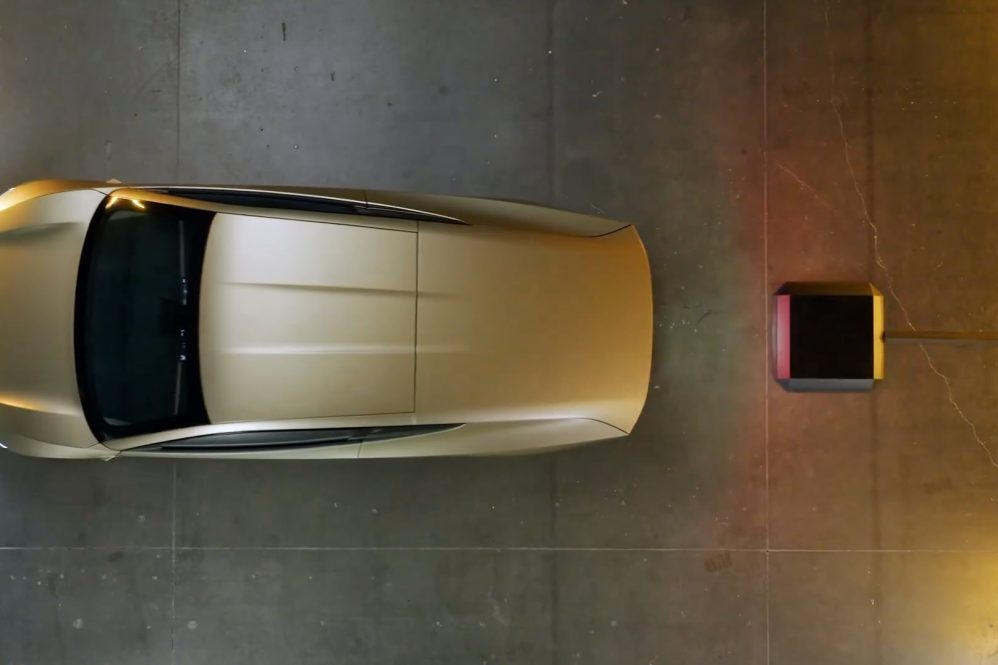
Tesla has published a new patent that sheds light on how the company could significantly improve wireless charging efficiency for future electric vehicles (EVs). The filing outlines a system that uses a vehicle’s air suspension to automatically adjust its position during wireless charging, helping ensure optimal energy transfer between the ground pad and the vehicle.
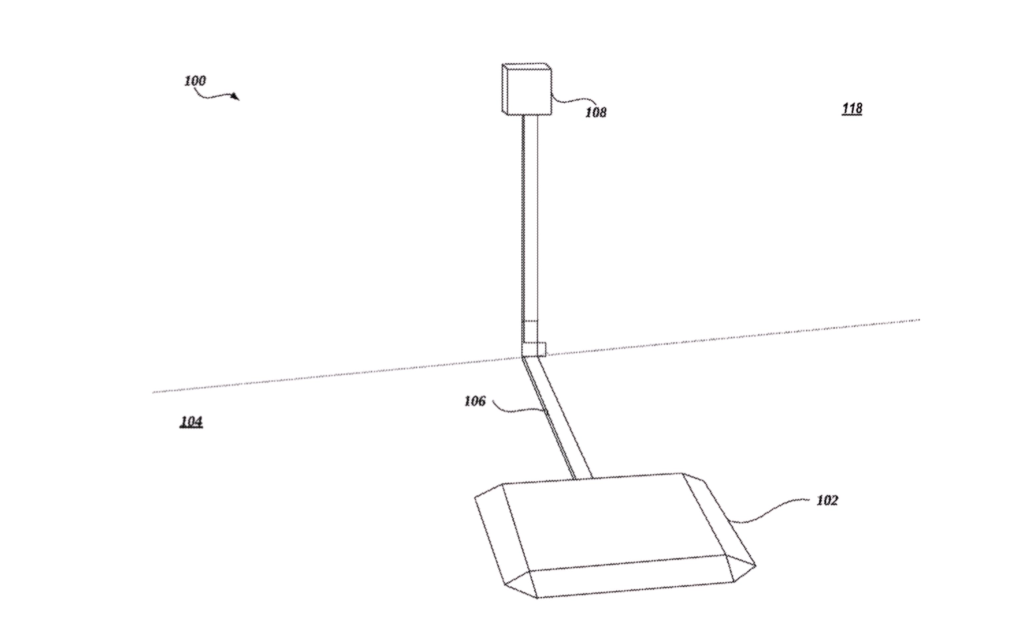
The patent, titled “Dynamic Adjustment for Wireless Charging Coupling Coefficients” and first shared by X user @seti_park, was published on March 12, 2026, though Tesla originally filed it in August 2025 with priority dating back to September 2024. The technology describes a closed-loop system that measures the magnetic alignment between a charging pad on the ground and a corresponding receiver mounted on the vehicle.
Wireless charging relies heavily on the alignment of two electromagnetic coils. When the coils are perfectly aligned, power can transfer efficiently. However, even small misalignments caused by uneven pavement or imperfect parking can reduce efficiency and generate excess heat.
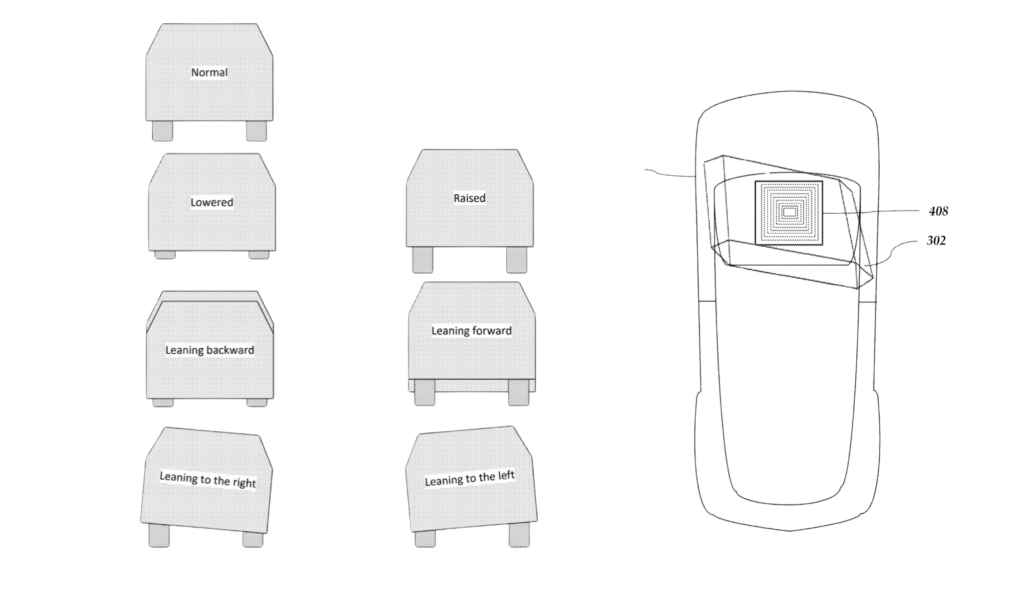
Tesla’s proposed solution allows the vehicle to correct those issues on its own. According to the patent, the system first measures the magnetic relationship between the charging pad and the vehicle coil using diagnostic signals. From this data it calculates a value known as the coupling coefficient, a measurement that determines how efficiently power can be transferred between the two coils.
If the value falls outside the optimal range, the system automatically adjusts the vehicle’s air suspension. The car may lower, raise, or tilt slightly in order to improve the alignment between the coils. The process repeats until the charging system detects that the coupling coefficient has reached the desired range, at which point wireless charging begins.
The patent also describes the possibility of small vehicle movements to improve alignment. If needed, the system could instruct the car to move slightly forward or backward to better position itself over the charging pad. Tesla notes that this process could rely on autonomous or semi-autonomous driving capabilities to make those adjustments.
Another notable feature is continuous monitoring during the charging session. Rather than optimizing alignment once and leaving it unchanged, the system periodically re-checks the coupling coefficient while charging is underway. If efficiency begins to drop due to factors such as temperature changes, shifting weight inside the vehicle, or suspension sag, the car can make additional adjustments mid-charge.
While Tesla has not confirmed where the technology will debut, the upcoming Cybercab is expected to rely on wireless charging to support continuous fleet operation. However, it is unclear at this point if it will feature air suspension, especially considering Elon Musk’s statement that they plan to sell the Cybercab to customers this year for less than US$30,000.
The Model S, Model X, and Cybertruck appear to be the most likely candidates to receive this technology since they are currently Tesla’s only vehicles equipped with air suspension. However, the Model S and Model X are expected to end production next quarter, which would leave the Cybertruck as the sole Tesla vehicle capable of enabling this type of charging optimization.
However, Tesla has previously indicated the Cybertruck will not support wireless charging due to efficiency losses caused by its high ride height, something which this patent addresses directly, even though some of the necessary hardware is already present in the vehicle.
TESLA FILED A PATENT THAT USES AIR SUSPENSION TO OPTIMIZE WIRELESS CHARGING IN REAL TIME
— SETI Park (@seti_park) March 12, 2026
When Tesla's shareholder meeting footage gave the first close look at Cybercab's underbody earlier this year, an air tank peeking out from under the rear bumper beam caught the industry's… https://t.co/uU8gDifQuB