Tesla’s long-term strategy is undergoing a fundamental transformation. Rather than focusing on selling vehicles to consumers, the company is positioning itself as a Transportation as a Service (TaaS) provider, where autonomous miles matter more than unit sales.
That shift was made clear during Tesla’s Q4 earnings call, where executives emphasized that autonomy dramatically expands the company’s total addressable market beyond traditional car ownership. Tesla’s Head of Vehicle Engineering Lars Moravy explained this in response to a question about the company’s plans to launch new models in different price segments.
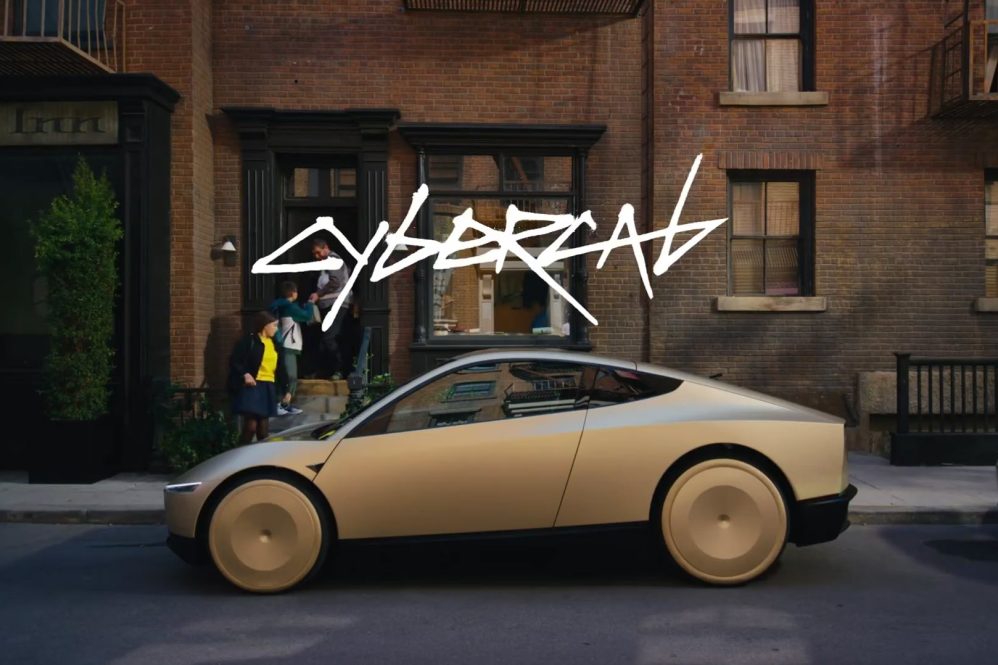
“This new autonomous market, you have to start thinking about us as moving to providing transportation as a service, more than the total addressable market for the purchased vehicles alone. Of course we do plan to have robotaxi in various shapes and sizes but obviously Cybercab will be the grand majority of that volume.”
The comments arrive as Tesla accelerates its pivot from vehicle production toward autonomy, robotics, and AI. CEO Elon Musk confirmed the cars that put Tesla on the map, the Model S and Model X, will be killed off in Q2, with the Fremont factory space being repurposed for Optimus humanoid robot production instead.
On the call, Musk was blunt about Tesla’s direction. “The vast majority of miles traveled will be autonomous in the future,” he said, adding, “I think long term, really the only vehicles that we’ll make will be autonomous vehicles.” That vision places the upcoming Cybercab—Tesla’s purpose-built robotaxi (that might not end up named Cybercab)—at the center of its transportation strategy, rather than as a niche product alongside consumer vehicles that many thought it would be.
How far away that future truly is, and whether this strategy ultimately succeeds, remains to be seen. However, with Cybercab production expected to begin in April and Unsupervised Full Self-Driving still not achieved, Tesla appears to be making its shift ahead of key technological milestones.
What we do know is that Tesla is choosing to pivot away from what made it what it is today. For more than a decade, Tesla’s identity was shaped by vehicles people aspired to own—cars that symbolized technological progress, environmental ambition, and a break from legacy automakers. That is now changing, and as Tesla leans fully into autonomy and robotics, it is leaving behind the consumer that helped built its reputation, betting instead that the future involves cars we summon, not that we drive.