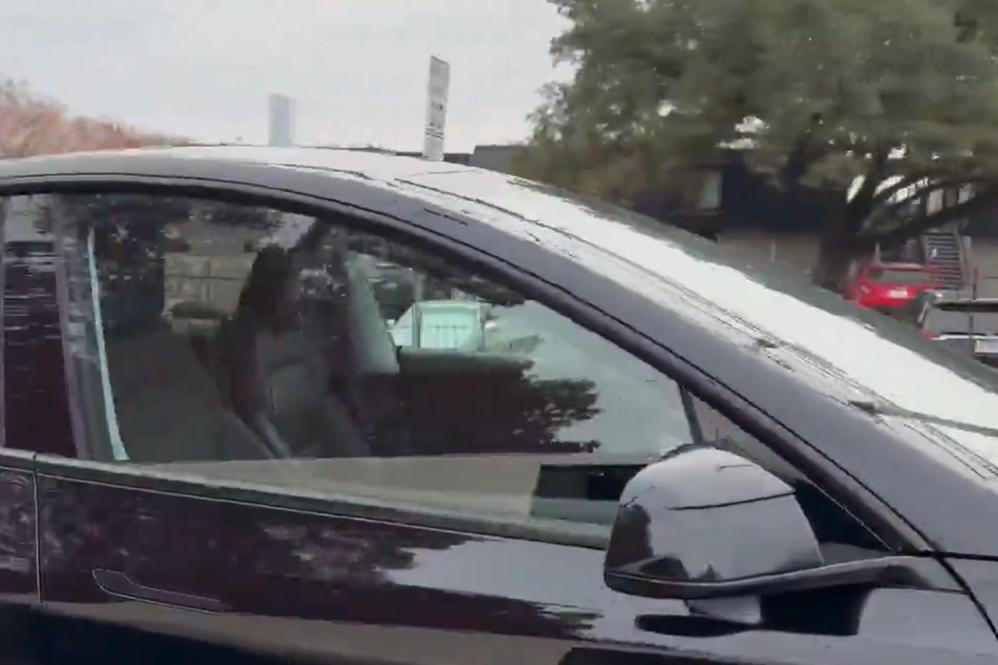
Tesla has officially entered the next phase of its autonomous driving rollout. On Sunday, two Tesla Model Y vehicles were spotted driving on public roads in Austin, Texas with no occupants inside, marking the automaker’s first real-world test of robotaxis operating without any in-car Safety Monitor.
The sightings were quickly acknowledged by Tesla executives. First was Ashok Elluswamy, Tesla’s Vice President of AI, who reacted to one of the videos by posting on X, “And so it begins!” Shortly afterward, CEO Elon Musk confirmed the milestone, stating that testing is now underway with no one in the car.
Just saw a Tesla with no one in the car @SawyerMerritt @wholemars @robotaxi @Tesla pic.twitter.com/llSt6UPbH4
— 420 Bounty Hunter (@Mandablorian) December 14, 2025
While Tesla has been operating its robotaxi network in Austin since June, that was with Safety Operators in either the front passenger or driver’s seat. These sightings are the first publicly observed instances of Tesla vehicles operating completely empty on public roads, not including the autonomous vehicle delivery from Giga Texas earlier this year.
Another driverless Tesla Robotaxi spotted in Austin!
— Drive Tesla (@DriveTeslaca) December 14, 2025
It’s happening!pic.twitter.com/es4crHkdsJ https://t.co/JieQiXNN0Z
Musk’s End-of-Year Timeline Tightens
The move to begin testing aligns closely with Musk’s repeated claims that Tesla would remove Safety Operators from its Austin robotaxi fleet before the end of 2025. Speaking at the xAI Hackathon earlier this month, Musk said unsupervised autonomy was “pretty much solved,” adding that robotaxis would operate in Austin with “no one in them — not even anyone in the passenger seat — in about three weeks.”
Musk has reiterated the same timeline multiple times in recent months, including during Tesla’s Q3 earnings call in October and again at the company’s shareholder meeting in November. While similar forecasts have been made in previous years, the appearance of unoccupied vehicles suggests Tesla is now moving from promises to validation.
How Tesla Is Preparing for Driverless Operation
Until now, Tesla’s Austin robotaxi program has relied on trained Safety Operators, with different seating requirements depending on road type. In contrast, Tesla’s Bay Area pilot continues to require Safety Operators in the driver’s seat at all times.
Recent software updates hint at how Tesla plans to operate without humans onboard. The latest Robotaxi app introduces cabin camera analytics and sound detection, enabling remote operators to see and hear activity inside the vehicle with passenger consent. The system can also listen for emergency sirens, allowing faster responses to developing situations.