Chinese electric vehicle (EV) maker Nio has reached a major milestone, completing its 100 millionth battery swap since launching the technology in 2018.
Nio founder and CEO William Li announced the milestone on social media, saying, “Proud to share that at 22:33:18 (UTC+8) on February 6, 2026, NIO hit 100,000,000th battery swap! Huge thanks to everyone who made this possible. Let’s Power Up!”
The milestone swap was reached less than eight years after the company launched its first battery swap station in Shenzhen in May 2018.
The company also launched an ad to celebrate the achievement, poking fun at Tesla by using a Model 3 in the ad comparing the time saving of battery swaps compared to traditional charging.
Nio has poked fun at Tesla during their new Battery Swap commercial.
— Nic Cruz Patane (@niccruzpatane) February 8, 2026
The company operates 3,729 battery swap stations in China, and has completed over 100M battery swaps. pic.twitter.com/mxELq7GTjv
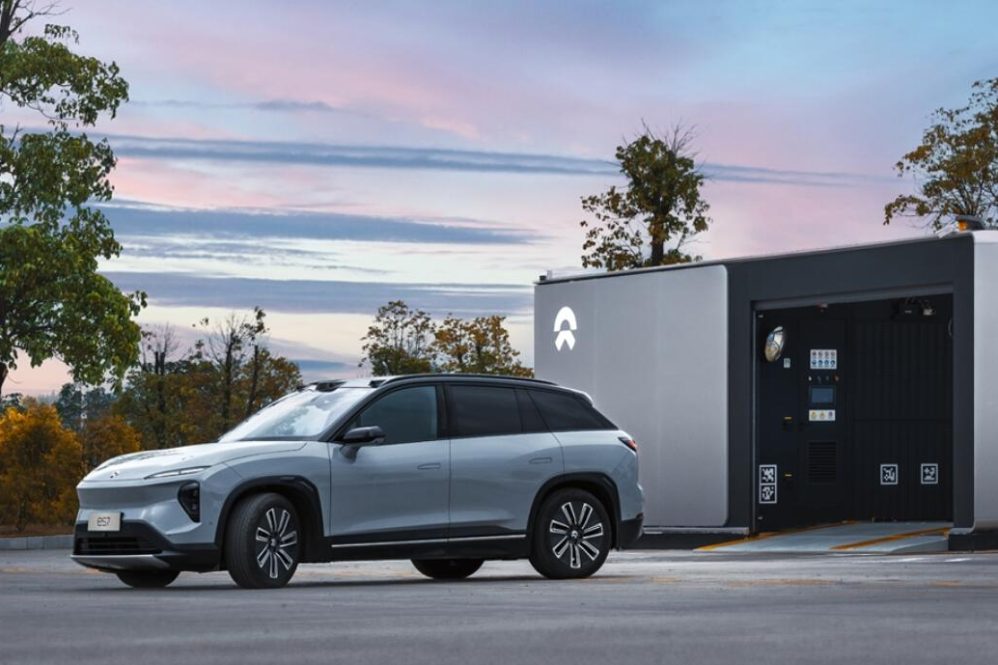
Nio’s battery swapping system allows compatible vehicles to exchange a depleted battery pack for a fully charged one in roughly three minutes—significantly faster than even the most advanced DC fast charging technologies. This speed advantage has helped Nio’s swap network gain traction, especially in China, where the company now operates more than 3,700 swap stations.
Globally, Nio has around 3,790 stations and plans to expand further, with CEO William Li confirming plans to add 1,000 additional swap stations by the end of 2026.
To put the 100 million battery swaps into perspective, Nio says its network has delivered 5.28 billion kWh of electricity to vehicles—equivalent to the annual energy consumption of millions of homes. The company also claims its battery swap services have collectively saved drivers more than 83 million hours compared to traditional charging.
What’s particularly notable is how quickly the adoption rate has accelerated. The first 10 million swaps took over four years to complete, but the jump from 80 million to 90 million swaps took just 100 days.
Battery swapping also enables Nio’s Battery-as-a-Service (BaaS) program, which lowers upfront vehicle costs by allowing customers to purchase the car without the battery and instead lease it. This can significantly reduce the initial purchase price while giving drivers flexibility to upgrade battery capacity when needed.