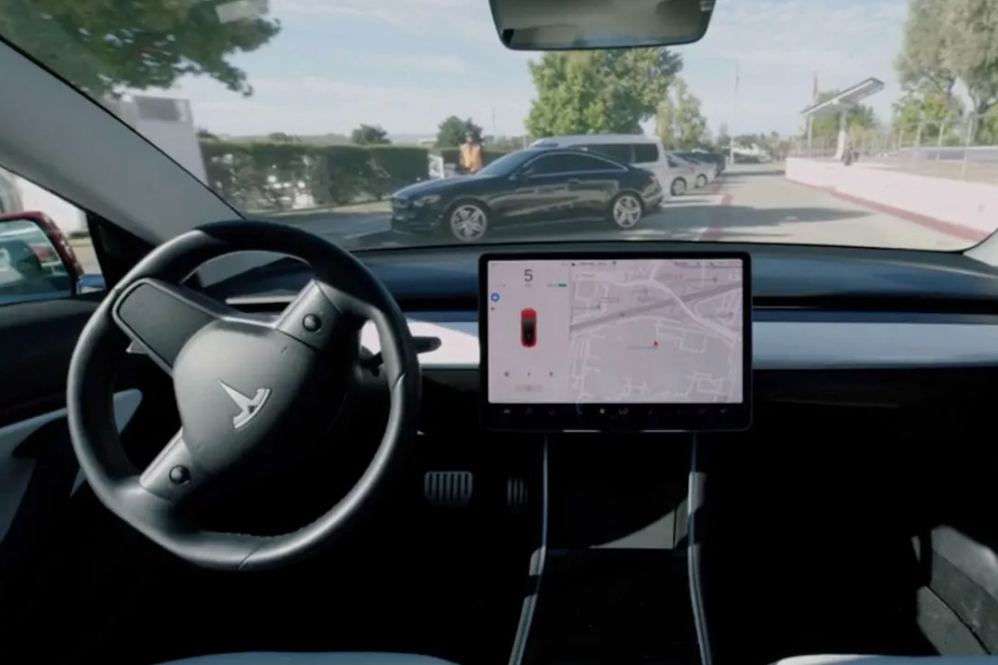
The National Highway Traffic Safety Administration (NHTSA) has officially closed its investigation into Tesla’s Actually Smart Summon feature, concluding that incidents tied to the system were both rare and largely minor in nature.
The probe was first launched in January 2025, covering more than 2.5 million Tesla vehicles, following reports of low-speed collisions during remote vehicle movements. At the time, regulators were looking into whether Tesla’s updated ‘Actually Smart Summon‘ feature posed a broader safety risk.
Now, after more than a year of investigation, the agency says the data does not support escalating the case.
According to the NHTSA’s Office of Defects Investigations (ODI), nearly all reported incidents involved minor property damage, such as contact with parking gates, bollards, or nearby vehicles. Importantly, the agency found no reports of injuries, fatalities, or crashes involving vulnerable road users.
The findings also highlight how uncommon these events were. Out of millions of Actually Smart Summon sessions, the NHTSA said only a “fraction of one percent” resulted in any kind of incident.
ODI’s analysis pointed to a combination of system limitations and user oversight as contributing factors. In many cases, drivers using the mobile app did not have a complete 360-degree view of their surroundings, limiting their ability to intervene when necessary. Most incidents occurred early in a session, often during initial maneuvers like reversing in tight spaces.
The investigation also identified a small number of edge cases involving environmental factors. Two incidents occurred in snowy conditions where forward-facing cameras were partially obstructed, preventing the system from properly detecting obstacles. In those cases, users did not intervene despite the obstruction being visible in the app’s camera feed.
According to the NHTSA, Tesla responded quickly during the investigation period, deploying a series of over-the-air (OTA) software updates aimed at addressing these scenarios. These updates introduced improved camera blockage detection, enhanced visibility checks, and upgrades to object recognition systems, including better handling of dynamic obstacles like gate arms.
Additional refinements later in 2025 further improved perception capabilities through updated neural networks, helping the system better interpret its surroundings in real time.
Despite closing the investigation, NHTSA emphasized that its decision does not rule out the possibility of a safety-related defect. The agency noted it could reopen the case or take further action if new information emerges.
You can read the full NHTSA ODI closing report below.