Canada’s DC fast-charging network is expanding at a record pace — and importantly, drivers are actually using it. A new Q4 2025 industry report from Paren, a charging data analytics platform, paints a detailed picture of how Canada’s public DC fast charging (DCFC) infrastructure evolved over the past year.
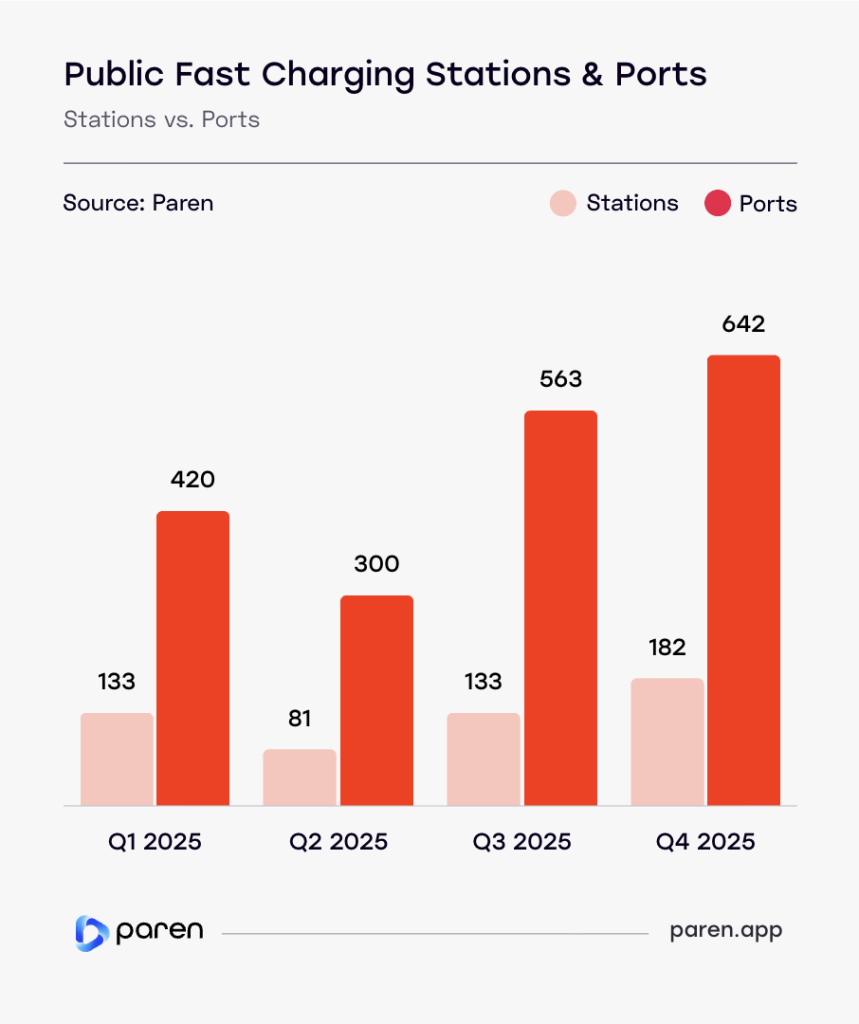
The headline number is impressive: 1,925 new fast-charging ports were added in 2025, pushing the national total to 8,804. That represents a 28% year-over-year increase, even as EV sales cooled compared to previous growth cycles.
Infrastructure Growth Outpaces Expectations
Deployment accelerated throughout the year, with Q4 setting a new quarterly record for installations. Canada also added 529 new fast-charging stations in 2025, bringing the total to 2,570 nationwide.
Interestingly, the number of ports is growing faster than the number of sites, meaning stations are getting larger. On average, Canadian DC fast-charging sites now host 3.42 ports per location, up slightly from 3.37 a year earlier. New sites built in 2025 averaged more than 3.6 ports each.
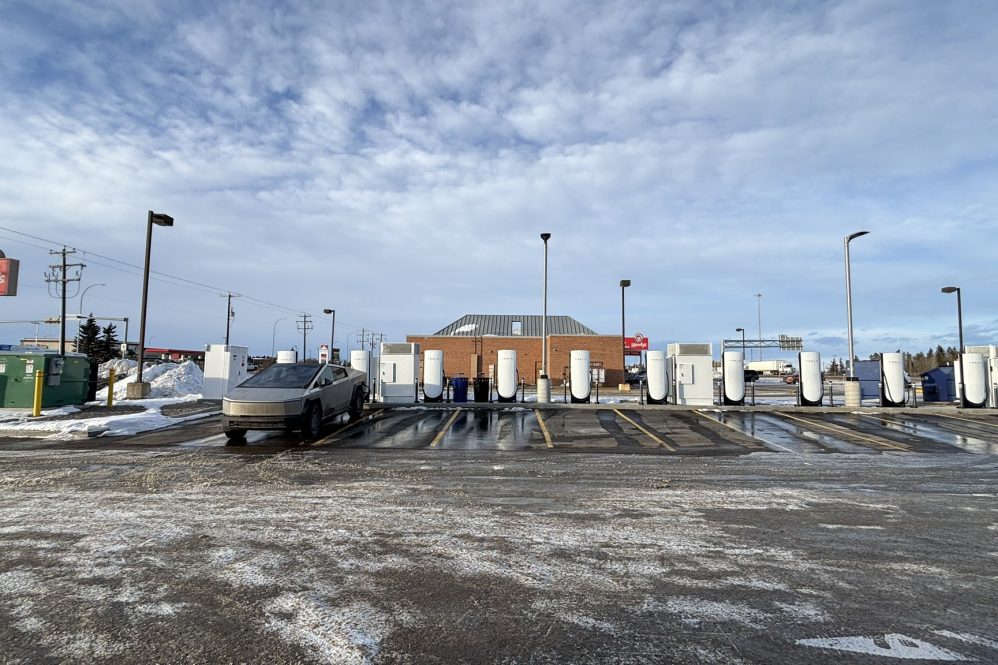
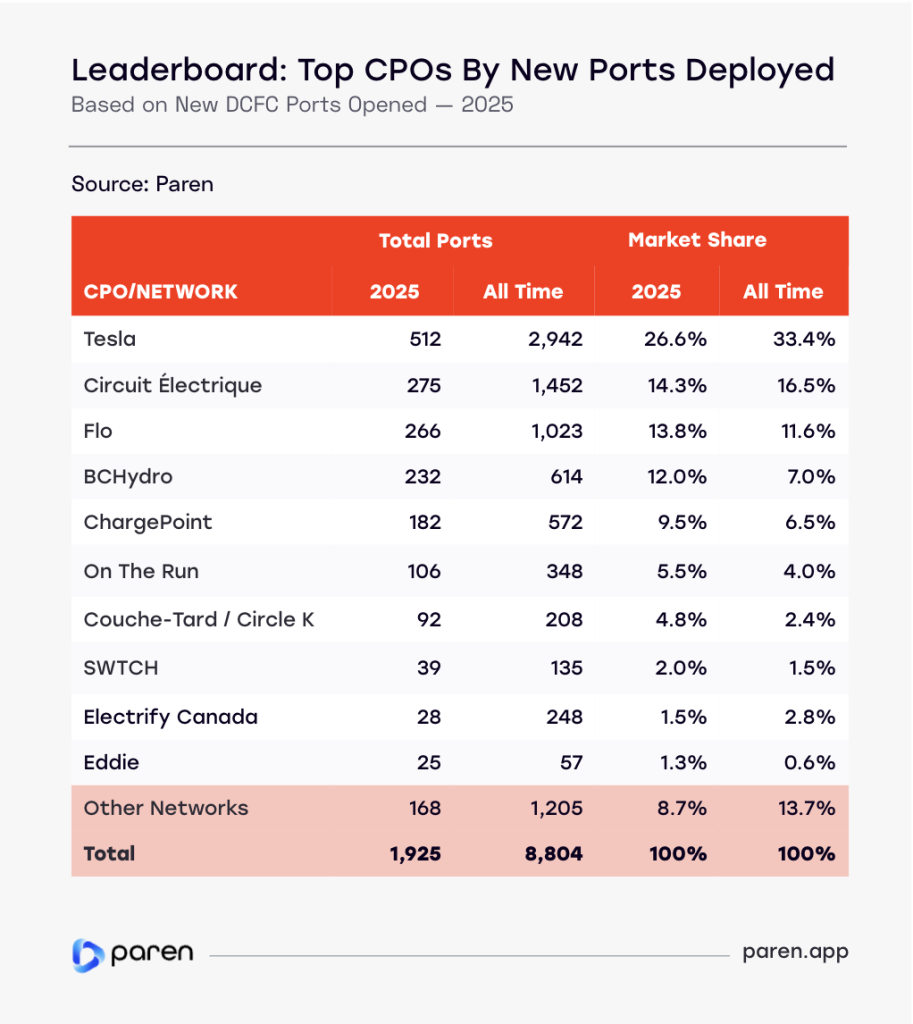
Tesla remains the largest single operator in the country, with 2,942 ports nationwide after adding 512 in 2025. However, its share of new deployments is gradually declining as competitors ramp up.
Among the fastest-growing networks last year were:
- Circuit Électrique (+275 ports)
- FLO (+266 ports)
- BC Hydro (+232 ports)
- ChargePoint (+182 ports)
The top five operators accounted for 76% of all new DCFC ports installed in 2025, underscoring the market’s concentration.
BC, Quebec, and Ontario Still Dominate
Fast chargers remain heavily concentrated in three provinces: British Columbia (2,493 ports), Quebec (2,650), and Ontario (2,406). Together, they represent nearly 86% of Canada’s total DCFC infrastructure — and accounted for almost 89% of new deployments last year.
Utility-backed expansion continues to play a major role. As Paren explains:
“Utility-backed networks continue to anchor deployment in the two largest markets. In British Columbia, BC Hydro accounted for 38% of the province’s 614 new ports in 2025. In Quebec, Circuit Électrique represented 45% of the 610 ports added. This concentration underscores the continued role of regulated, utility-led expansion in scaling infrastructure across provinces.”
Utilization Remains Stable — Even as Capacity Grows
One of the most encouraging findings is that demand is keeping pace with supply. Average national utilization reached 11.9% in Q4 2025, up slightly from 11.6% in Q3. That may sound modest, but it’s notable given the surge in new deployments. In other words, new capacity is being absorbed rather than sitting idle.
Major metro areas are driving much of that demand. Vancouver posted utilization near 30% in Q4, while Toronto surpassed 20%. In less densely populated provinces, utilization remains much lower — often just one or two sessions per port per day.
Pricing and Reliability
The national average price for DC fast charging in Q4 was approximately $0.42/kWh before taxes, though provincial averages ranged from about $0.37 to $0.65 per kWh. Pricing models vary widely, with Canada showing a much more diverse mix than the U.S., including fixed, time-based, power-based, and time-of-use structures.
Reliability remains strong nationwide, averaging 93.2% in Q4 — comparable to U.S. performance levels. Most provinces scored above 90%, though remote regions like Yukon lagged behind.
Overall, 2025 marked a clear scaling year for Canada’s fast-charging ecosystem. The infrastructure is growing, utilization is holding firm, and leading markets are beginning to shift from basic corridor buildout to densification — a sign that Canada’s EV charging network is maturing, but not yet saturated.
You can watch the Paren webinar discussing their report below.

Always get the latest - make Drive Tesla your preferred source on Google
Are you buying a Tesla? If you enjoy our content and we helped in your decision, use our referral link to get three months of Full Self-Driving (FSD).Drive Tesla uses affiliate links, which means we may earn a commission if you make a purchase through them, at no additional cost to you. Thank you for your support.