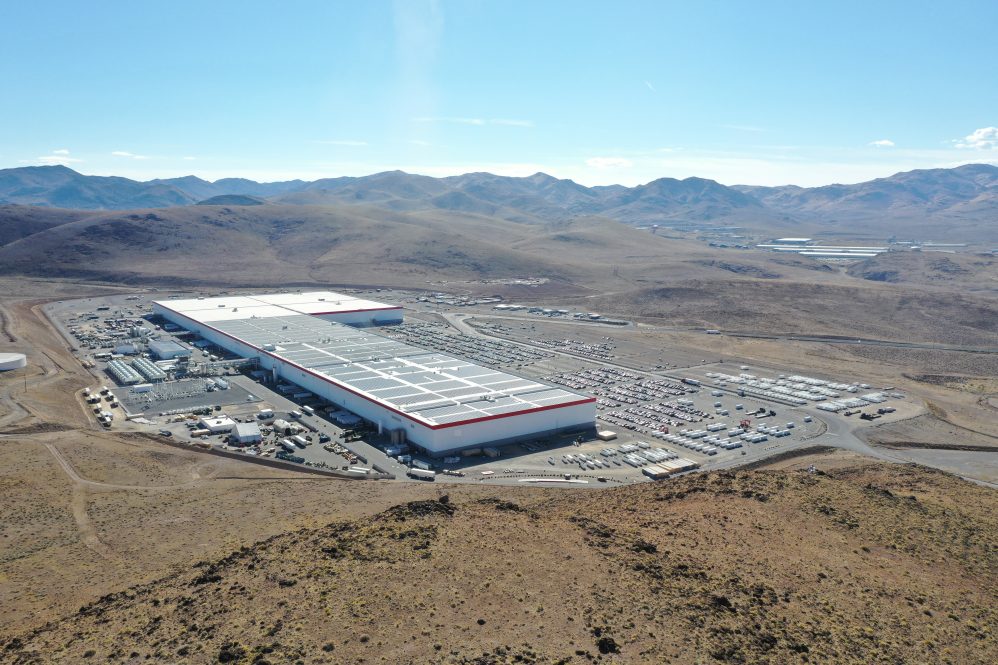
Tesla has agreed to pay a $200,000 fine to Nevada regulators after operating battery recycling equipment at Giga Nevada without the required air quality permit.
According to a settlement reached with the Nevada Division of Environmental Protection (NDEP), the violation stemmed from a battery recycling line where the equipment included shredding and disassembly systems designed to extract valuable materials such as lithium and copper from used battery cells and other components.
State inspectors first discovered the recycling operation during a site visit in February 2023. Records later reviewed by regulators indicated the equipment had been constructed in late 2020 and had been running since at least May 2021, despite not receiving the necessary permit approval.
The recycling equipment was under review as part of a draft air quality permit due to its emissions profile. Tesla did not dispute the violation during enforcement discussions with regulators, and both parties finalized a settlement agreement on January 30, 2026. Under the terms of the agreement, Tesla must pay the fine within 60 days. (via The Nevada Independent)
The funds will be deposited into Nevada’s air quality management account, where they may be used to support clean transportation initiatives, including programs aimed at accelerating adoption of lower-emission trucks and buses. The agreement specifies that Tesla cannot benefit from any programs funded by the penalty.
Despite the violation, Tesla’s Gigafactory Nevada was granted a Class I Air Quality Operating Permit in October 2025, reflecting the facility’s continued expansion and higher emissions potential. This classification applies to large industrial sites capable of emitting more than 100 tons annually of regulated pollutants or over 25 tons of hazardous air pollutants.
Previously, the facility operated under a Class II permit, which applied to lower-emission operations.
Battery recycling plays a critical role in Tesla’s long-term sustainability strategy, helping recover valuable materials for reuse while reducing reliance on new mining. The company has increasingly emphasized closed-loop battery production as part of its effort to scale electric vehicle manufacturing globally.

Always get the latest - make Drive Tesla your preferred source on Google
Are you buying a Tesla? If you enjoy our content and we helped in your decision, use our referral link to get three months of Full Self-Driving (FSD).Drive Tesla uses affiliate links, which means we may earn a commission if you make a purchase through them, at no additional cost to you. Thank you for your support.