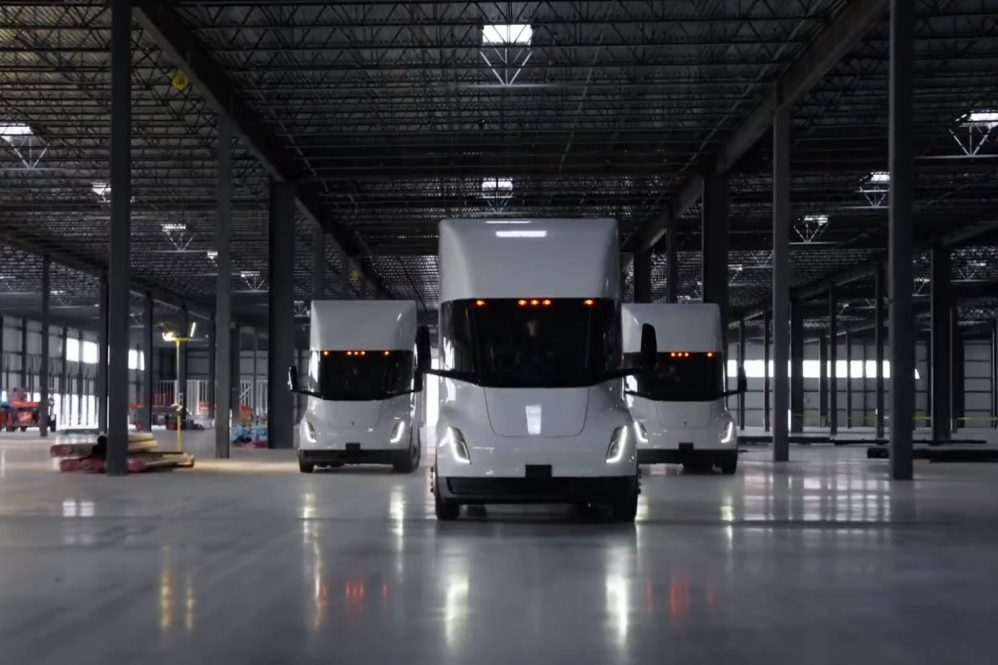
Tesla has begun finalizing key details for the Tesla Semi as it prepares to enter volume production, with pricing information now emerging. The automaker has also publicly revealed dozens of planned Megacharger stations and dedicated service locations across the United States for the first time.
Tesla Semi Pricing
Over the weekend Tesla announced the Semi’s final production specs, which confirmed two variants—a Standard Range version capable of approximately 325 miles (523 km) of range and a Long Range variant capable of up to 500 miles (805 km) on a full charge, even at maximum gross combined weight. The most important piece of information was still missing – price.
According to information obtained by Electrek, the Long Range Tesla Semi will be priced at US$290,000 (~C$392,500), while the 325-mile Standard Range version will be priced at approximately US$260,000 (~C$352,000).
Although roughly 60% higher than Tesla’s $180,000 estimate announced in 2017, the Semi remains significantly less expensive than competing electric Class 8 trucks, which average around US$435,000. When combined with lower operating costs, Tesla has positioned the Semi as a compelling alternative to both diesel and competing electric trucks. Tesla estimates operators could achieve payback in roughly four years, particularly for regional and high-utilization routes.
Tesla Megacharger Network
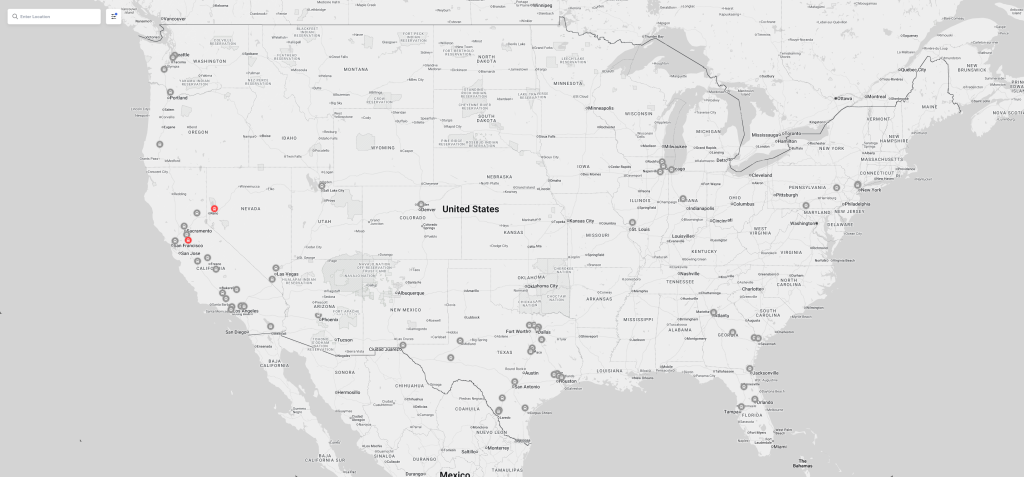
Alongside emerging pricing details, Tesla has also publicly revealed dozens of Tesla Semi Megacharger locations for the first time by adding them to its “Find Us” map. While Tesla had previously confirmed Megachargers existed, this marks the first time the company has disclosed specific locations and the scale of its planned network.
According to the map, there are currently two operational Megacharger stations, with 64 additional locations listed as “coming soon.”
Texas leads the expansion with 19 planned Megacharger locations, followed by California with 17. Both states play critical roles in freight movement due to their large ports, distribution centers, and manufacturing activity. Additional Megachargers are planned in Florida, Georgia, Illinois, and Washington, each with four locations, while New York and Nevada will each receive two sites.
Arizona, Colorado, Utah, Oregon, Indiana, Pennsylvania, and Maryland are also slated to receive Megacharger stations.
Dedicated Tesla Semi Service Centers
In addition to charging infrastructure, Tesla has revealed plans to establish approximately 20 dedicated Tesla Semi service locations across the United States. While these were not added to Tesla’s online map, one was put on display a at the Midwest truck and trailer show in Peoria, Illinois this week. These facilities will provide specialized maintenance and support tailored specifically to heavy-duty electric trucks. (via @brewski77)
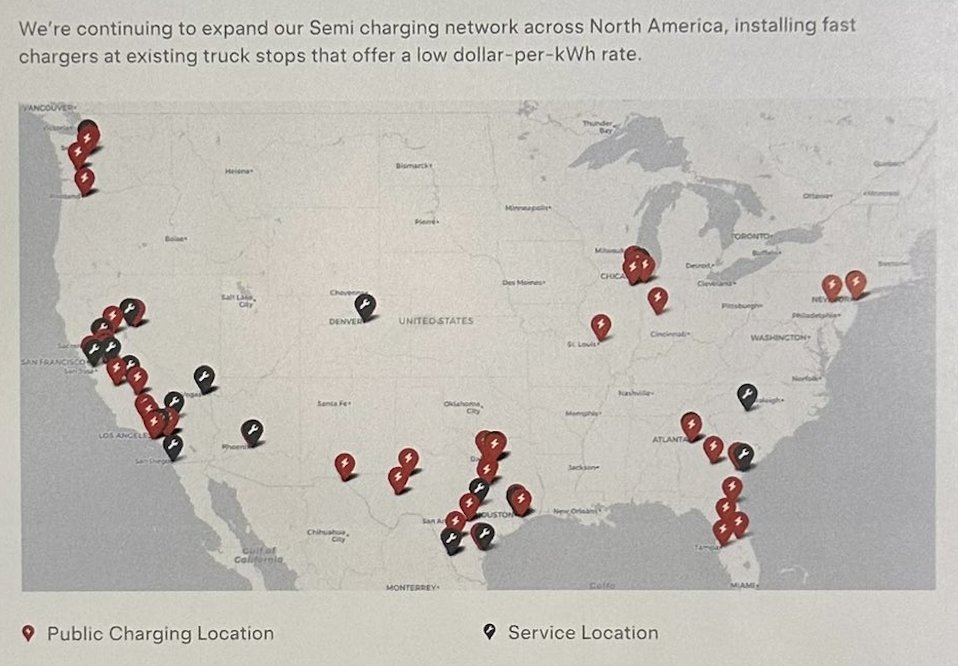
Dedicated service locations will be essential for fleet operators, helping ensure high uptime and fast turnaround times—critical factors for commercial trucking operations.
Until now, Tesla had revealed limited information about how it would support widespread Semi deployments beyond early pilot customers. With final production specs confirmed, pricing now emerging, and dozens of Megacharger and service locations publicly identified for the first time, Tesla is clearly gearing up for high-volume production from its dedicated Semi factory in Nevada and the first customer deliveries. At full capacity, the factory will be able to produce 50,000 Semi trucks per year.

Always get the latest - make Drive Tesla your preferred source on Google
Are you buying a Tesla? If you enjoy our content and we helped in your decision, use our referral link to get three months of Full Self-Driving (FSD).Drive Tesla uses affiliate links, which means we may earn a commission if you make a purchase through them, at no additional cost to you. Thank you for your support.