As Canada prepares to reopen the door to Chinese-made electric vehicles (EVs) under a new tariff-quota system, most attention has been focused on which automaker could move fastest once restrictions ease.
While Tesla appears best positioned in the near term, one Chinese automaker has been hiding in plain sight with a big regulatory advantage: BYD.
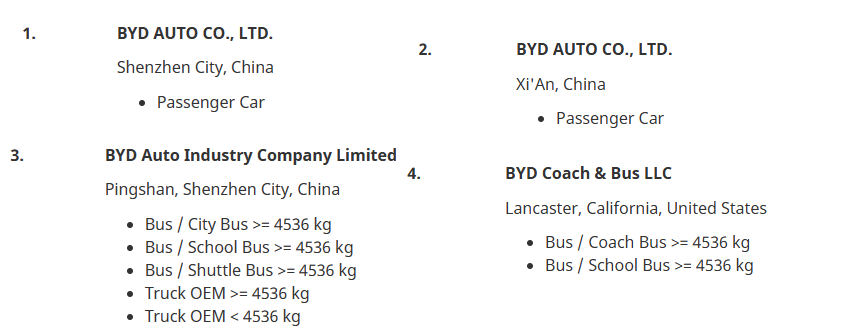
Long before tariffs dominated the conversation, BYD had already cleared one of Canada’s biggest regulatory hurdles. According to cardog, the Chinese automaker is already listed in Transport Canada’s Appendix G registry. This program allows automaker to import new, foreign-manufactured vehicles that already comply with Canadian Motor Vehicle Saefty Standards (CMVSS).
A Regulatory Door That Was Never Closed
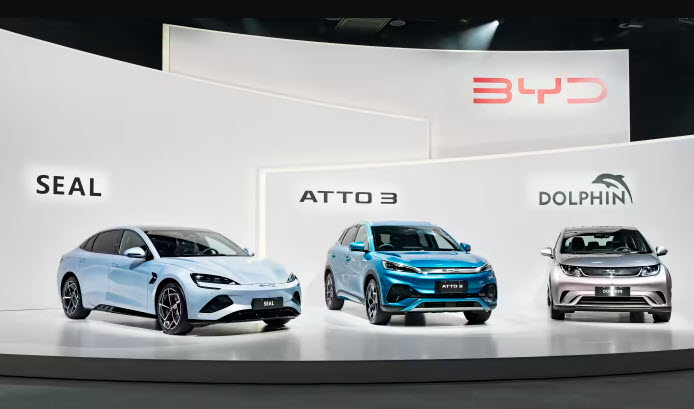
BYD appears in the registry across four entries. Its Shenzhen and Xi’an manufacturing facilities — both responsible for producing mainstream passenger vehicles — are already authorized for Canadian imports. These factories build models like the Dolphin, Seal, Atto 3, and Seagull, vehicles that would directly target Canada’s mass-market EV segment.
The automaker also appears in the registry for its coach and school buses from California, as well as trucks from China. However, BYD currently only produces a hybrid electric pickup, the Shark, not a pure electric version.
Why The Pre-Approval Matters
Importantly, Transport Canada paused new Appendix G applications for passenger vehicles in 2025. That pause led many to assume Chinese automakers would need several months of regulatory groundwork before entering Canada.
However, BYD’s listing predates the freeze.
What BYD Can — and Can’t — Do Today
With Appendix G approval already in place, BYD can theoretically begin importing vehicles as soon as the reduced tariffs officially take effect. It can work directly with Canadian dealers, rely on existing compliance documentation, and avoid the slow, paperwork-heavy case-by-case import process.
What still stands in the way is commercial execution. BYD must establish a dealer network, build service and warranty infrastructure, and introduce its brand to Canadian consumers — challenges Tesla solved years ago.
A Major Advantage Over Chinese Rivals
BYD’s regulatory standing gives it a clear edge over other Chinese brands like Nio, XPeng, and Li Auto, to name just a few. Those companies would either need to wait for the Appendix G intake process to reopen, rely on limited case-by-case approvals, or commit to Canadian manufacturing — none of which offer a fast path to scale.
Although we can only assume that once the tariffs are reduced, Transport Canada will reopen its Appendix G program to applications, giving Chinese automakers a quicker path into Canada.
BYD’s other edge is it can also control its own logistics. The company operates a fleet of dedicated roll-on/roll-off car carriers, a rarity in the auto industry. When one of those ships is bound for Canada, it will be a concrete signal that their market entry is on the horizon.
The Bottom Line
For BYD, the question is no longer if it can enter Canada, but how aggressively it chooses to do so. The regulatory groundwork is already complete. What remains are commercial decisions and political timing.
When Canada’s tariff wall finally lowers, BYD won’t be lining up at the gate. It will already be inside.

Always get the latest - make Drive Tesla your preferred source on Google
Are you buying a Tesla? If you enjoy our content and we helped in your decision, use our referral link to get three months of Full Self-Driving (FSD).Drive Tesla uses affiliate links, which means we may earn a commission if you make a purchase through them, at no additional cost to you. Thank you for your support.