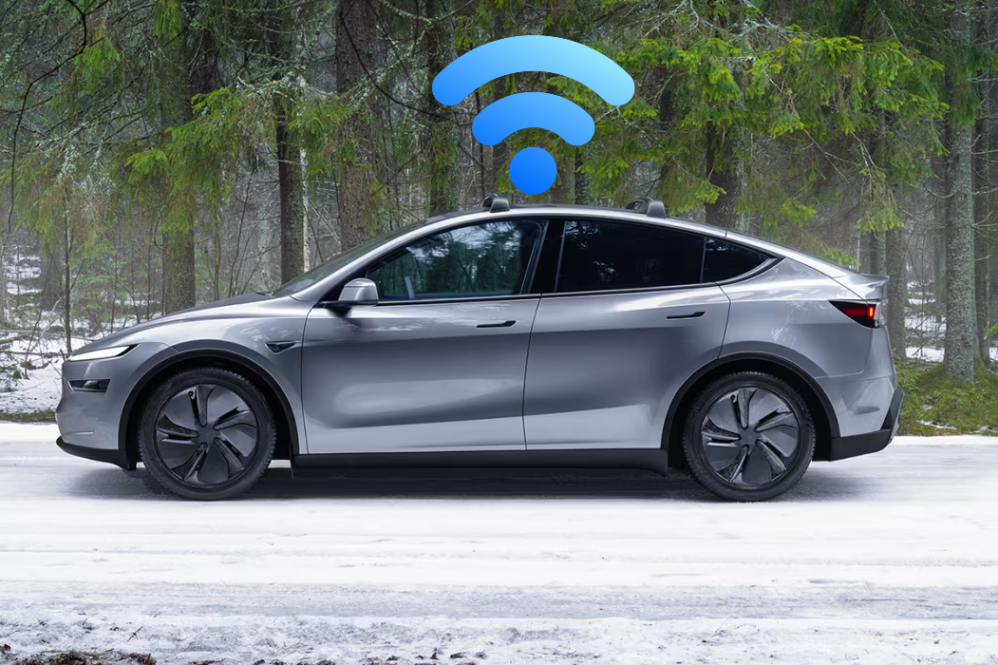
Samsung has reportedly become Tesla’s new supplier of 5G modem chips for its next-generation vehicles. The South Korean chipmaker will begin shipping automotive-grade cellular modems in the first half of the year, with the first units being installed in Tesla’s Robotaxi fleet operating in Texas.
According to a report from The Elec, the new modems will handle one of the most critical jobs inside Tesla’s vehicles: keeping them constantly connected to Tesla’s servers, mapping systems, and over-the-air update network. While Tesla’s onboard computers perform real-time driving decisions, fast and reliable connectivity is what enables high-definition maps, live fleet monitoring, software updates, and data uploads that improve Full Self-Driving (FSD) over time.
The report claims the initial batch of Samsung modems will be used in Tesla’s Robotaxi vehicles in Texas, which are expected to rely heavily on cloud connectivity for fleet coordination, remote diagnostics, and map synchronization. After that rollout, the same modem platform is expected to be introduced into additional Tesla models, including the Model 3 and Model Y.
This is the first time Samsung has ever supplied 5G modem chips to Tesla. Until now, Tesla has relied almost exclusively on Qualcomm for in-vehicle cellular connectivity. The shift to Samsung gives Tesla a second high-volume supplier for one of its most strategically important components, particularly as the company prepares to deploy thousands of autonomous vehicles that will need to remain online almost continuously.
Unlike smartphone modems, automotive 5G chips must meet much stricter standards. They are required to operate across extreme temperature swings, handle constant vibration, and function reliably for more than a decade. According to industry sources, Samsung’s System LSI division designed the modem specifically to meet Tesla’s long-term durability and performance requirements. The chips are now in the final testing phase ahead of volume production.

Always get the latest - make Drive Tesla your preferred source on Google
Are you buying a Tesla? If you enjoy our content and we helped in your decision, use our referral link to get three months of Full Self-Driving (FSD).